

Artisanal Collective Launches AEMS Living Heritage Lab to Support Artisan Empowerment, Cultural, and Market Access
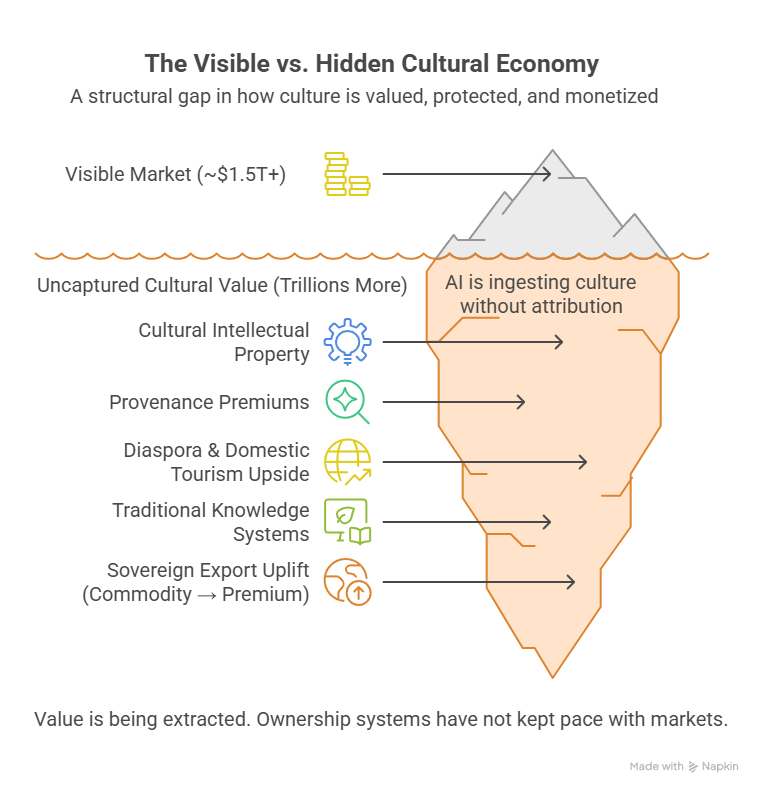
Unlocking the $1.5 Trillion Cultural Economy
Artisanal Collective (501c)
Global collaborators invited to help shape the future of shared infrastructure for artisans, cultural heritage communities, and the creative economy.
The Living Heritage Lab represents the first public phase of AEMS and has been created to gather practical input from artisans, NGOs, governments, universities, museums, tourism organizations, researchers, sustainability practitioners, and other stakeholders engaged in cultural heritage and artisan livelihoods.
Cultural heritage and artisan economies constitute a global ecosystem estimated at over $1.5 trillion annually, supporting livelihoods, tourism, trade, cultural identity, and community development. Despite its significance, much of the supporting infrastructure remains fragmented, limiting collaboration among artisans, governments, NGOs, universities, cultural institutions, researchers, and markets.
"AEMS was never envisioned as simply a technology platform," said Charles Kao, Founder & Chairman of the Artisanal Collective.
"It is shared infrastructure intended to help connect artisans and their supporting ecosystems, while enabling stakeholders to collaborate on new approaches to cultural preservation, market access, sustainability, storytelling, tourism, and economic opportunity."
The initiative seeks to address a long-standing challenge facing artisan communities worldwide: while cultural heritage contributes significantly to local identity, livelihoods, tourism, and sustainable development, the infrastructure that connects artisans, institutions, markets, and knowledge systems remains fragmented.
The Living Heritage Lab provides an environment where stakeholders can explore opportunities, including:
• Artisan storytelling and visibility
• Sustainability learning and assessment
• Cultural heritage documentation
• Knowledge preservation
• Market access pathways
• Digital product passports
• Stakeholder collaboration
• Tourism and destination development
• AI-enabled knowledge systems
Unlike traditional development projects, AEMS is being developed through a collaborative participation model. Stakeholders are invited to contribute recommendations, participate in consultations, and help shape future priorities through thematic Work Groups and Task Forces.
Early consultation and collaboration activities include engagement with UNESCO-related stakeholders, universities, artisan organizations, government agencies, and organizations such as Contact Base (banglanatak dot com), the Federation of Handicraft Associations of Nepal, Sri Lanka craft sector stakeholders, and academic partners exploring AI governance and cultural heritage applications.
Among our lead collaborators is Contact Base (banglanatak dot com), a UNESCO-accredited NGO based in India that has worked with more than 80,000 artisans through its livelihood and cultural heritage programs over the past two decades.
The Living Heritage Lab is intended as an open consultation and learning environment. Participation is available to qualified organizations and individuals without licensing fees.
Future phases of AEMS will be informed by recommendations emerging from collaborators, partners, workgroups, taskforces, and participating artisan communities.
Organizations interested in participating as collaborators, partners, advisors, researchers, or stakeholders are invited to contact the Artisanal Collective.
About Artisanal Collective
The Artisanal Collective is a U.S.-based nonprofit organization exploring how technology, collaboration, and cross-sector partnerships can strengthen artisan livelihoods, cultural heritage preservation, sustainability, and market access. Through AEMS, the Collective seeks to provide shared infrastructure that enables artisans and stakeholders to participate in shaping more resilient and inclusive cultural economies.
Website: https://artisanalcollective.org
Charles Kao
Artisanal Collective
email us here
The Artisanal Empowerment and Market Access System enables artisans to activate their creative work
Legal Disclaimer:
EIN Presswire provides this news content "as is" without warranty of any kind. We do not accept any responsibility or liability for the accuracy, content, images, videos, licenses, completeness, legality, or reliability of the information contained in this article. If you have any complaints or copyright issues related to this article, kindly contact the author above.
